Attribution Without Cookies: QR Codes as First-Party Measurement
Why a QR scan is a cleaner first-party signal than a cookied click, what it can and cannot attribute, and the honest limits of scan-based tracking.
Third-party cookies are disappearing from browsers, consent rates for the ones that remain keep falling, and an ad platform's own attribution reporting is, by construction, marking its own homework. Against that backdrop, a QR scan is a strange kind of asset: narrow, unglamorous, and quietly more trustworthy than most of what digital advertising typically offers as proof that a placement worked. A scan is a deliberate physical action, tied to a known location, recorded the moment it happens by whoever owns the code, with no cookie, no third-party pixel, and no ad platform's self-reported number sitting between the action and the record of it.
Why a scan beats an impression or a cookied click
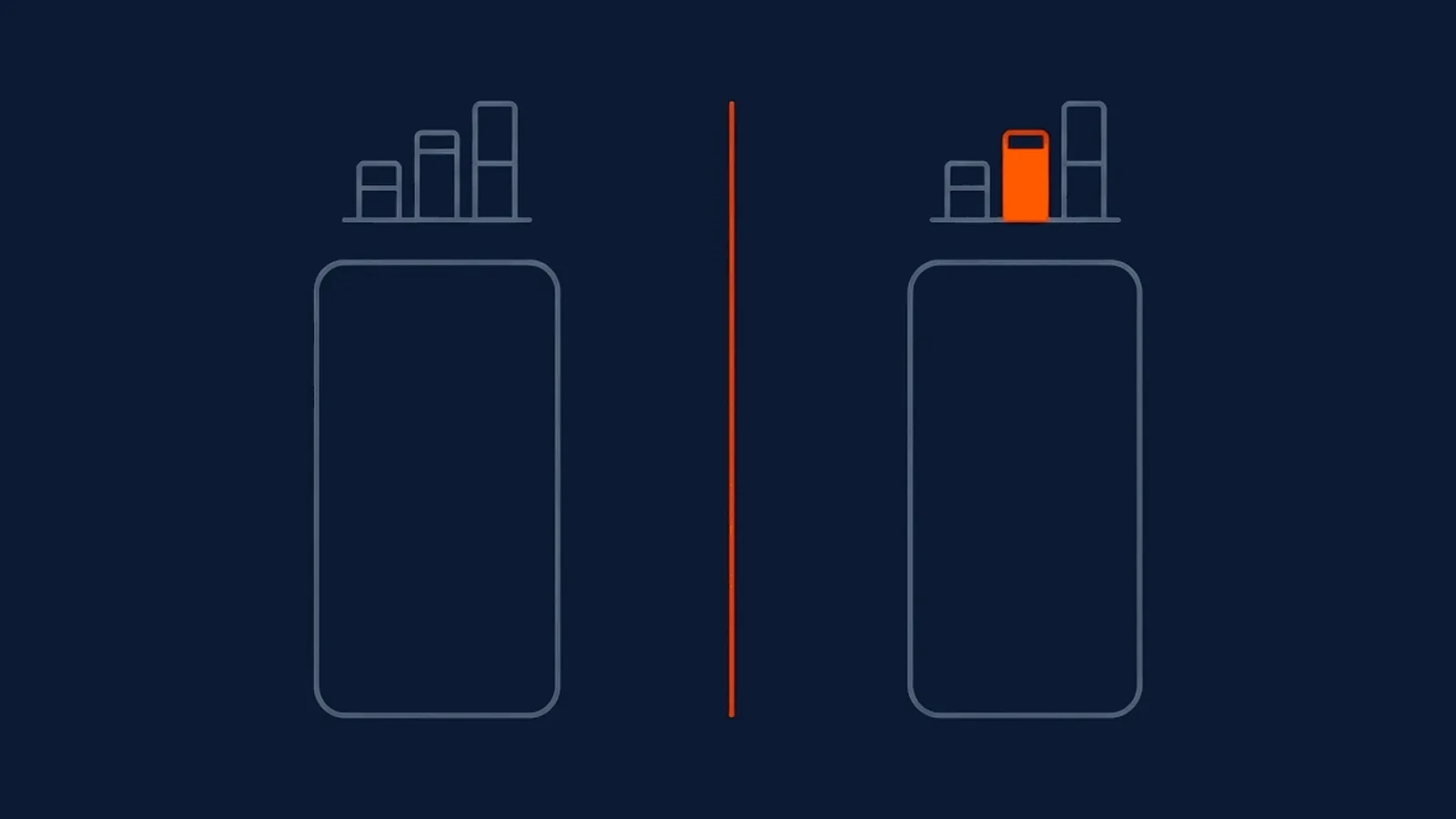
An impression proves nothing more than that a placement existed somewhere a person theoretically could have seen it; it says nothing about attention, intent, or action. A cookied click is closer to a real signal, but it depends on a chain of things that have all gotten less reliable: a cookie surviving across a session, a consent banner being accepted rather than declined, and an ad platform accurately reporting a click it has every commercial incentive to count generously. A scan skips most of that chain entirely. Someone had to physically be at a specific place, decide the code was worth their attention, and take a deliberate action with their own device. That's a narrower kind of evidence than an impression, but it's evidence of something that actually happened, recorded by the party who put the code there in the first place, not relayed through an intermediary with its own reporting standards.
This matters most for exactly the kind of spend that's historically been hardest to measure: print, packaging, out-of-home, and events, where there was previously no digital trace of a physical placement's performance at all. The nine metrics a QR platform can actually observe turn what used to be an unmeasurable line item, a poster, a shelf card, a booth banner, into something with a real, first-party number attached to it.
What a scan can attribute, and what it can't
A scan reliably connects three things: a specific physical placement, a specific moment, and a landing-page visit on a device someone actually held. Tagging each placement with its own UTM parameters is what turns that connection into something you can actually compare across placements, since the scan alone tells you a code was used, and the tag tells you which code, at which physical spot, in which campaign.
What it doesn't do is follow that person any further than the landing page your own analytics can see. It can't confirm the visit turned into a sale that happened somewhere else, a phone call, an in-store purchase days later, unless that later action is itself instrumented and connected back to the same session. It can't identify the person scanning beyond whatever their landing-page session reveals. And it can't, on its own, tell you whether the campaign caused an incremental sale or simply reached someone who would have converted anyway, since that's a question about causation that no single measurement source answers by itself.
| What a scan attributes | What it doesn't attribute |
|---|---|
| A specific placement drove a specific landing-page visit | Whether that visit led to an offline purchase, unless separately tracked back |
| The device and rough timing of that visit | The identity of the person beyond what the landing page itself captures |
| Which physical location or creative variant performed better, when each carries its own code | Whether the campaign caused incremental demand versus reaching an already-convinced buyer |
| A scan is an action that happened; it never has to be inferred | A person's activity on a different device from the one that scanned |
Connecting scan to session to conversion
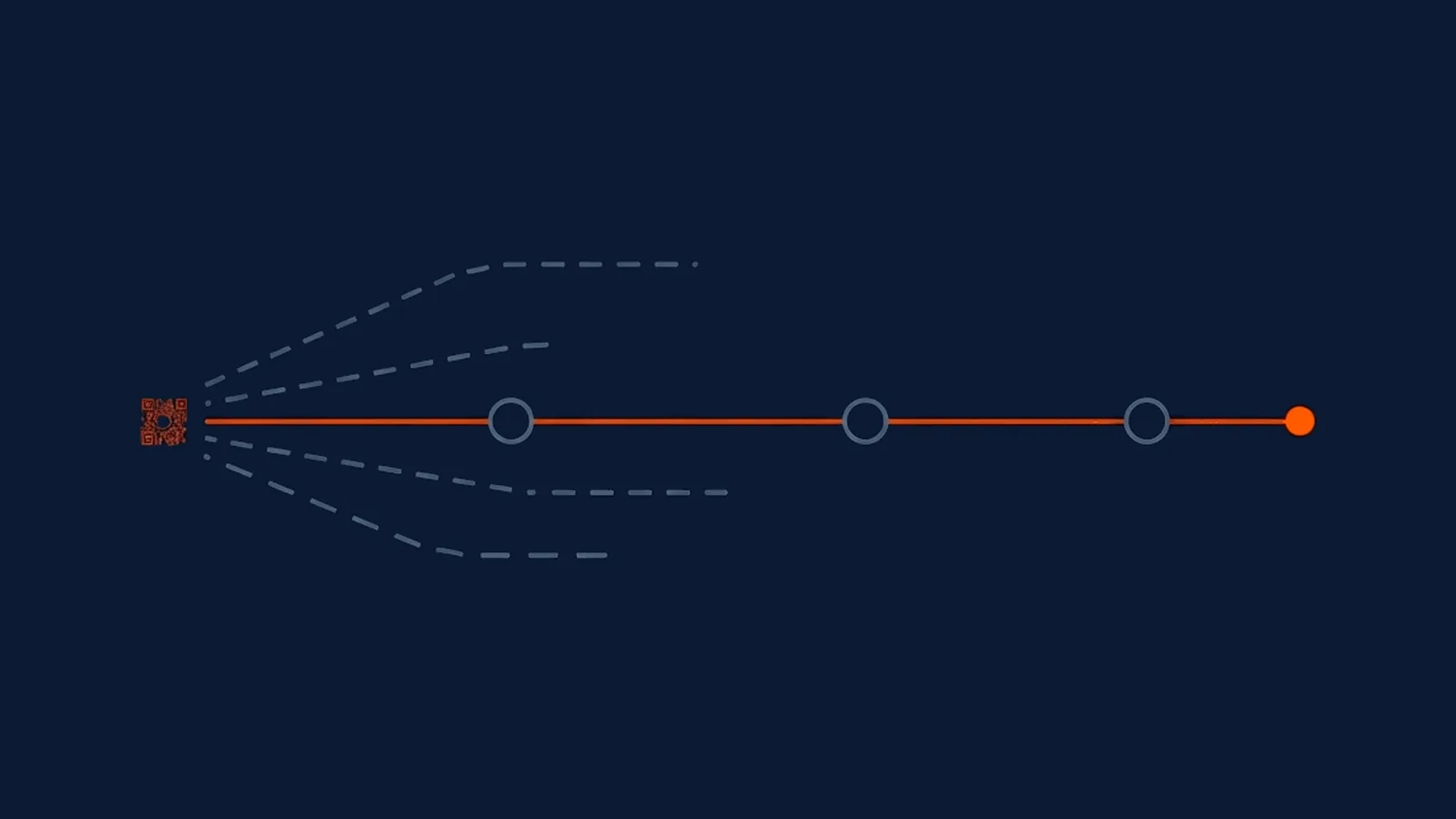
The mechanism is straightforward, though it takes deliberate setup rather than happening automatically. A scan opens the destination URL carrying a UTM parameter set specific to that placement; your own website analytics tool, whatever you already use, picks up those parameters the moment the page loads and attaches them to that visitor's session. Anything that visitor does afterward within that same session, a form submission, an add-to-cart, a completed purchase, on the pages your own analytics is tracking, carries the same campaign and placement tags forward. The QR platform's job stops at recording the scan and preserving the parameters through the redirect; everything from the landing page onward, including tying a scan to an eventual conversion, is your own analytics doing what it already does for any other tagged traffic source.
This is worth stating plainly because it's sometimes assumed a QR platform does this connecting work on your behalf, end to end. It doesn't, and no honest platform should claim it does: per-code analytics reports what happened at the code, scan counts, timing, geography, device; what happens after the redirect is exactly as visible, and exactly as limited, as your website analytics already makes it for any other traffic source.
The consent trap: why your own analytics under-reports
Here's the genuinely uncomfortable part, worth saying without softening it. A cookie-consent banner that defaults to declining non-essential tracking, which is both good privacy practice and, in a growing number of jurisdictions, a legal requirement, means a real share of visitors who scan a code will never appear in your downstream analytics at all. They scanned, they landed on the page, and then, having declined tracking, they vanished from whatever tool you use to measure what happened next. Your website analytics isn't lying to you, but it's systematically undercounting, and the undercount grows directly with your decline rate.
This is exactly why the scan record itself, held server-side by whoever operates the QR platform, deserves more trust than the downstream analytics tool sitting after it. Recording that a scan happened doesn't require tracking the visitor's subsequent behaviour or setting a cookie on their device; it's a server-side event tied to the code itself, unaffected by whatever consent decision that visitor makes on the landing page a moment later. The practical implication: treat your scan counts as a comparatively solid number, and treat your post-scan conversion figures as a real but understated one, undercounted specifically by whatever share of visitors declined tracking, not by some fixed or predictable amount you can simply correct for after the fact.
The consent position under DPDP and GDPR
Both frameworks converge on the same practical requirement relevant here: meaningful, informed consent for non-essential tracking, with a genuine option to decline that doesn't degrade into a fake choice. A consent centre that defaults to declining non-essential collection, rather than opting a visitor in and hoping they don't notice, is the compliant posture under both, and it's also, not coincidentally, the posture that produces the honest undercount described above. There is no way to have full downstream visibility and a genuinely privacy-respecting consent default at the same time; accepting the undercount is the cost of taking the second one seriously; recognising that trade-off explicitly is better than pretending it doesn't exist.
The hard limits, stated plainly
Two limits are permanent, not solvable with a better tool or a smarter integration. There is no reliable cross-device identity here: a scan on a phone tells you nothing about that same person's later activity on a laptop, and connecting the two would require exactly the kind of persistent tracking a first-party, consent-respecting approach is built to avoid. And there's no view-through credit: a person who saw a poster, didn't scan it, and later bought the product anyway leaves no trace in this system at all, because a scan-based model only ever measures scans, not influence that never produced an action. Device data itself tells you what device scanned, never what other devices belong to the same person, and geography from a scan resolves to a city at best, not a persistent identity across visits. Neither limitation is a flaw to be patched; both are the direct, unavoidable consequence of measuring only what actually happened rather than inferring what might have.
The strategic case, not just a measurement one
The reason this argument is worth making to a marketing lead rather than just a marketer running one campaign is that it points at something structural, not a single channel's performance. As browsers keep restricting third-party cookies and consent rates keep declining, a growing share of digital advertising's own measurement infrastructure is quietly eroding underneath campaigns that were built assuming it would keep working. A scan-based signal doesn't erode the same way, because it was never built on top of a cookie in the first place; it's a first-party record of a deliberate action, held by whoever owns the code, independent of whatever browsers or ad platforms decide to change next. That independence is the asset worth budgeting around, not any single campaign's scan count.
This doesn't make a scan a replacement for cookied digital measurement everywhere; it measures a narrower slice of the customer journey, the physical-to-digital handoff specifically, and says nothing about pure online-to-online activity. What it offers instead is a rare thing in current measurement: a signal that gets more valuable, not less, as the rest of the measurement stack degrades around it, precisely because it was never dependent on the parts that are degrading.
What this means for your next campaign
Treat a scan-based attribution model for exactly what it honestly is: a strong, first-party signal for whether a specific physical placement drove a specific digital action, and a poor tool for anything requiring cross-device identity or credit for influence that never converted into a scan. Tag every placement distinctly, connect scans to your own downstream analytics deliberately rather than assuming it happens automatically, and report scan counts and post-scan conversions with the consent-driven undercount stated alongside them, not silently absorbed into a single number that looks more precise than it actually is.
Straight answers
Why is a QR scan considered a cleaner signal than a cookied ad click?
A cookied click depends on a cookie surviving across sessions, a consent banner being accepted, and an ad platform's own reporting being accurate, all of which have degraded as browsers restrict cookies and consent falls. A scan is a deliberate physical action tied to a known placement at a known moment, recorded directly by whoever owns the code, with no third-party cookie or ad-platform layer in between. It's a narrower signal, but a more reliable one for what it measures.
Can a QR code tell me if the same person scanned twice on two different devices?
No. A scan is tied to whatever device did the scanning, and there's no reliable way to connect that scan to the same person's activity on a different device afterward, since doing so would require exactly the kind of cross-device identity tracking a privacy-respecting, cookie-free approach deliberately avoids. Treat each scan as a distinct event tied to a device and a moment, not as a data point about a single continuous person.
Does a QR code attribution model account for view-through effects?
No, and it shouldn't claim to. A view-through conversion credits an ad or placement for influencing someone who saw it but didn't interact with it at the time, which by definition a scan-based model can't capture, since a scan only exists when someone actually acts. This is a real limitation worth stating plainly rather than working around with an estimated or modelled figure standing in for something that was never actually observed.
If my consent banner defaults to declining tracking, does that break QR attribution?
It reduces what your own website analytics can see after the scan, since a visitor who declines non-essential cookies won't be tracked by whatever analytics tool runs on your landing page. The scan itself is unaffected, since recording that a code was scanned isn't the same as tracking the visitor afterward. This is exactly why server-side, first-party scan data deserves more trust than a downstream analytics tool that a consent decline can quietly undercount.