When Static Wins: 6 Cases Where a Dynamic QR Is the Wrong Tool
Six honest cases where a static QR code beats a dynamic one, what you give up in each, and why a code meant to outlive any vendor should be static.

Most of this archive argues for dynamic QR codes, and for good reason: most marketing use cases benefit from an editable destination, per-code analytics, and the safety of edit-time destination screening. None of that is true everywhere, and pretending otherwise would be dishonest about a product decision that has real, situation-specific trade-offs. Here are six cases where static is the right tool, argued as sincerely as the case for dynamic is argued everywhere else in this archive.
The six cases
| Case | Why static wins | What you give up |
|---|---|---|
| Permanent physical installation (plaque, monument, equipment label) | The installation itself is meant to outlast any digital service; the code should match | Editing, tracking, disabling |
| WiFi credentials | The network name and password are the entire payload; there's nothing to redirect | Ability to update credentials without reprinting |
| A vCard that must keep working forever | Contact details printed once should work exactly as printed, with no dependency on a third party staying online | Editing after a role or number changes |
| An offline-only payload that never needs a network | Some QR content, plain text, a fixed reference number, doesn't route anywhere at all | Nothing; a redirect adds a dependency with no benefit here |
| Air-gapped or regulated environments | An external redirect through a third-party domain is often unacceptable by policy in these settings | Analytics and editability, which are usually prohibited anyway |
| Anything that must outlive any vendor, including us | A vendor's server, including ours, could someday stop resolving redirects; a static code has no such single point of failure | Every dynamic-only feature: editing, analytics, disabling |
Physical and permanent placements
A plaque, a monument inscription, or a label welded onto industrial equipment is meant to remain accurate and functional for years, often decades, well past any reasonable expectation that a specific software vendor will still be operating unchanged. A dynamic code on a monument depends on that vendor's redirect service staying online for the entire life of the installation, which is a dependency nobody installing a monument should accept for something meant to be permanent. A static code carrying a fixed reference, a URL to an archival page, a plain description, works for exactly as long as the physical plaque itself survives, with nothing else required to keep working.
WiFi credentials sit in the same category for a different reason: the QR code encodes the network name and password directly, so there's no destination to redirect to and nothing meaningful for a dynamic code to add. If the password changes, the code needs replacing regardless of whether it was static or dynamic, since the credentials themselves are the payload, not a link pointing at credentials stored elsewhere. Choosing dynamic here adds a dependency, and a marginal cost, for a capability that doesn't actually apply to this content type at all.
A vCard printed on packaging, a piece of stationery, or a permanent sign belongs here too, since it's meant to hand over contact details reliably, indefinitely, to anyone who scans it. Dynamic vCards are useful when contact details might change and you want to update them without reprinting, but for a genuinely permanent placement, the certainty that the code will keep working exactly as printed, with no dependency on any redirect service remaining operational years later, often matters more than the convenience of a future edit you may never actually need to make. All three cases share the same underlying shape: the physical object the code sits on is built to last, and the code should be built to match it.
Content, compliance, and vendor independence
A different group of cases has nothing to do with physical permanence and everything to do with what the code actually needs to do. Plain text, a fixed serial number, a static reference code: content like this was never going anywhere in the first place, so a dynamic redirect adds a layer of dependency and complexity that returns nothing in exchange. A static code encoding the exact content directly is not just adequate here; it's strictly better, since there's no server involved at all, nothing to go down, and nothing to misconfigure months after the print run ships.
Some environments add a compliance dimension on top of this. Certain industrial, defence, healthcare, or financial settings restrict or prohibit routing through an external third-party domain as a matter of policy, regardless of how well-secured that domain happens to be. A dynamic code's redirect through a vendor's short-link domain is exactly the kind of external dependency these policies are written to exclude. A static code, encoding the final destination directly with no intermediary domain in the path at all, is often the only option compliant with this kind of restriction, independent of whether analytics or editability would otherwise be useful in a less constrained setting.
The last case in this group is worth stating most plainly, because it applies to MyQRx specifically, not just to competitors. A dynamic code depends on its issuing vendor's redirect service continuing to resolve, indefinitely, for the code to keep working at all. We disclose our ownership and the domain the redirect runs on precisely because that dependency is real and worth knowing about, but disclosure doesn't remove the dependency itself; it only makes it visible. If a code genuinely needs to outlive any possible vendor, MyQRx included, a static code is the only design that actually achieves that, because a static code has no vendor to depend on in the first place, and nothing we publish about ourselves changes that basic fact about how the two formats work.
The one honest limitation running through all six
Every case above shares the same trade-off: a static code cannot be disabled, tracked, or edited after it's printed. Static codes cannot be disabled, full stop, because there is no server-side redirect to intercept; the destination lives inside the printed pattern itself, not in a record a vendor holds on your behalf. This is a real cost in most marketing contexts, where you might discover months later that a destination needs to change, a promotion ends, a URL structure moves, or that a code has quietly become a liability worth switching off. In each of the six cases here, though, that same permanence is precisely the feature being chosen, which is why calling it a limitation only tells half the story. The absence of a kill switch is the point when nothing should ever need switching off in the first place.
The hybrid pattern
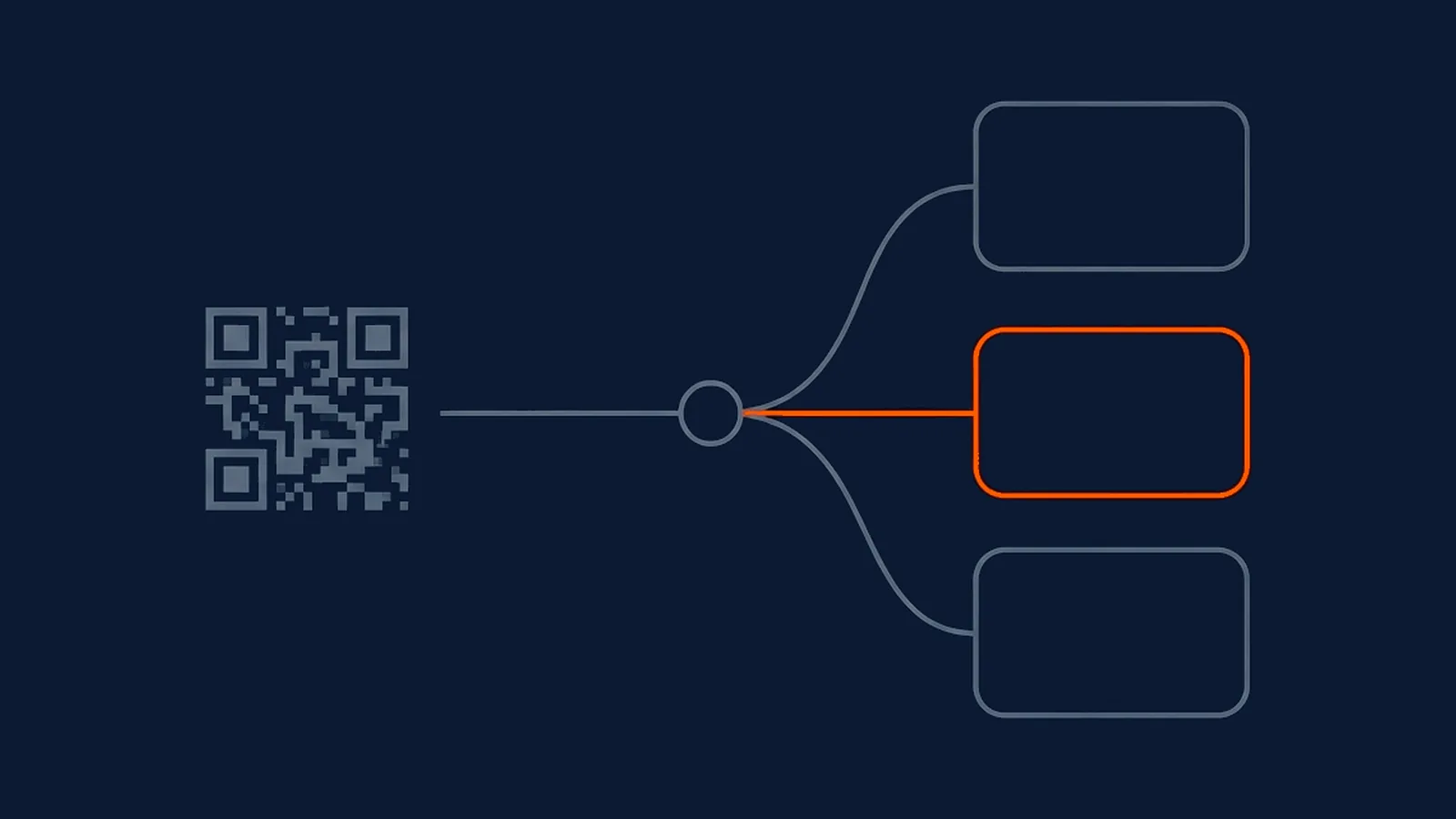
Where one code genuinely needs both durability and flexibility, print a static code pointing to a page on your own permanent domain, one you control and will keep running for as long as the physical material exists, and let that page itself link out to whatever needs to change: a current manual version, an updated support number, a time-limited registration campaign that can use a dynamic code of its own. The static code guarantees the entry point survives forever, independent of any vendor; your own page, not a redirect service, carries everything that needs room to move.
What this means for your next campaign
Reach for static specifically when a code's destination genuinely will not, and should not, ever need to change, and don't treat that as a lesser choice than dynamic, since it's the correct tool for exactly that situation. Static generation costs nothing regardless of which case applies, which is the point: this recommendation isn't shaped by which option happens to be the paid one.
Straight answers
If dynamic QR codes are more flexible, why would anyone choose static?
Flexibility has a cost: a dynamic code depends on a vendor's server staying online and its short link continuing to resolve, indefinitely, for the code to keep working. A static code has no such dependency; its destination is physically encoded in the pattern, so it works exactly as long as the printed material survives. For a code meant to outlive any single vendor, that independence is worth more than the ability to edit it.
Can a static QR code be tracked or disabled if something goes wrong with it?
No, and this is the honest trade-off, not a hidden limitation. A static code has no server-side record to check scans against and no redirect to intercept, so there's nothing to disable and nothing to measure beyond what the destination page itself might track independently. This is a genuine benefit for a permanent installation nobody wants dependent on a vendor, and a genuine risk for anything where you might later need to change the destination or shut it off.
What's the hybrid pattern for something like a product warranty or manual?
Print a static code carrying a link that will always resolve, like a page on your own permanent domain, and have that page itself link out to whatever changes: a specific manual version, a current support number, a dynamic code for time-limited registration offers. The static code guarantees the entry point survives forever; your own webpage, not a vendor's redirect, carries the parts that need to change.
Does MyQRx make money when someone chooses a static code instead of a dynamic one?
Static generation is available at no cost, so choosing static over dynamic for a genuinely permanent use case costs nothing either way. The recommendation in this post is based on which tool actually fits each situation, not on which one happens to be paid, and several of the cases below are exactly the kind of use static was built to handle well.