Print Once, Change Forever: Editing a Dynamic QR After It Ships
What actually changes when you edit a dynamic QR code after print, what stays fixed forever, and why the edit audit trail matters more than the edit.
The single clearest argument for a dynamic QR code over a static one is also the most commonly misunderstood: what actually happens when you "edit" a code that's already printed and out in the world. It isn't magic, and it isn't really an edit to the code itself. Understanding the mechanic, not just the benefit, is what lets you reason correctly about what an edit can and can't do, and why the record of every edit matters as much as the edit itself.
Two layers, and only one of them ever changes
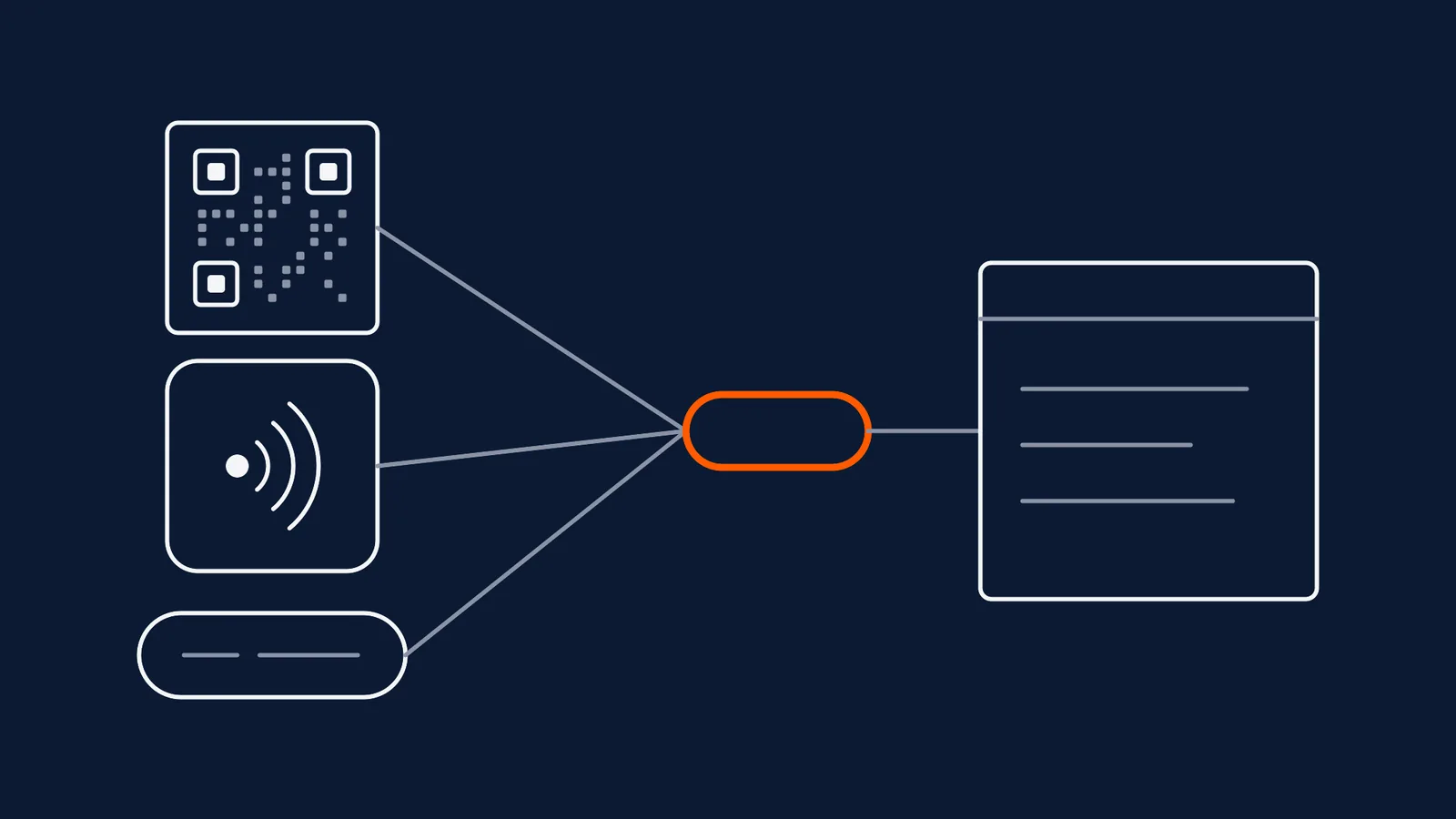
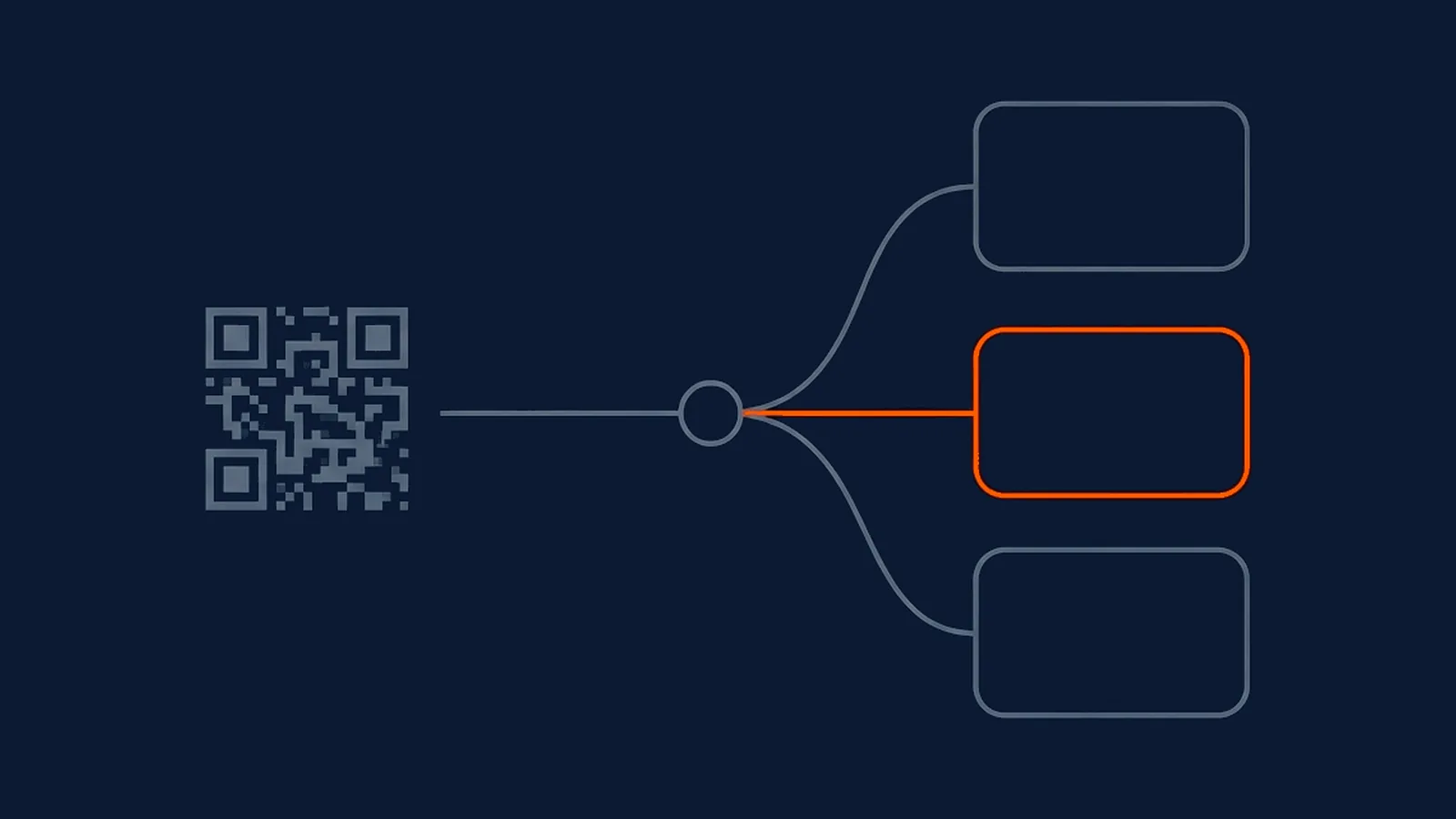
A dynamic QR code is really two things stacked on top of each other, and separating them is the entire trick. The first layer is the printed pattern, the actual grid of modules a camera reads, generated once at creation time and never touched again. That pattern encodes a short, fixed link, something like tilg.in/x7k2p, and it is this short link, not your real destination, that's baked into the pattern. The second layer is a record, held on a server, that maps that short link to wherever it should redirect right now. Editing a dynamic code means changing that record, the second layer, while the first layer, the printed pattern, sits completely untouched on every physical copy that already exists.
This is why "editing a QR code" is a slightly misleading phrase, even though it's the one everyone uses. Nothing about the code changes. What changes is a single row in a lookup table that the code's short link points at. Every scan triggers a fresh lookup at that exact moment, checks the current record, and redirects accordingly. Two people scanning the identical printed code an hour apart, one before an edit and one after, land on two different destinations, and neither one required so much as a fresh print run.
What stays fixed, and why that's the whole point
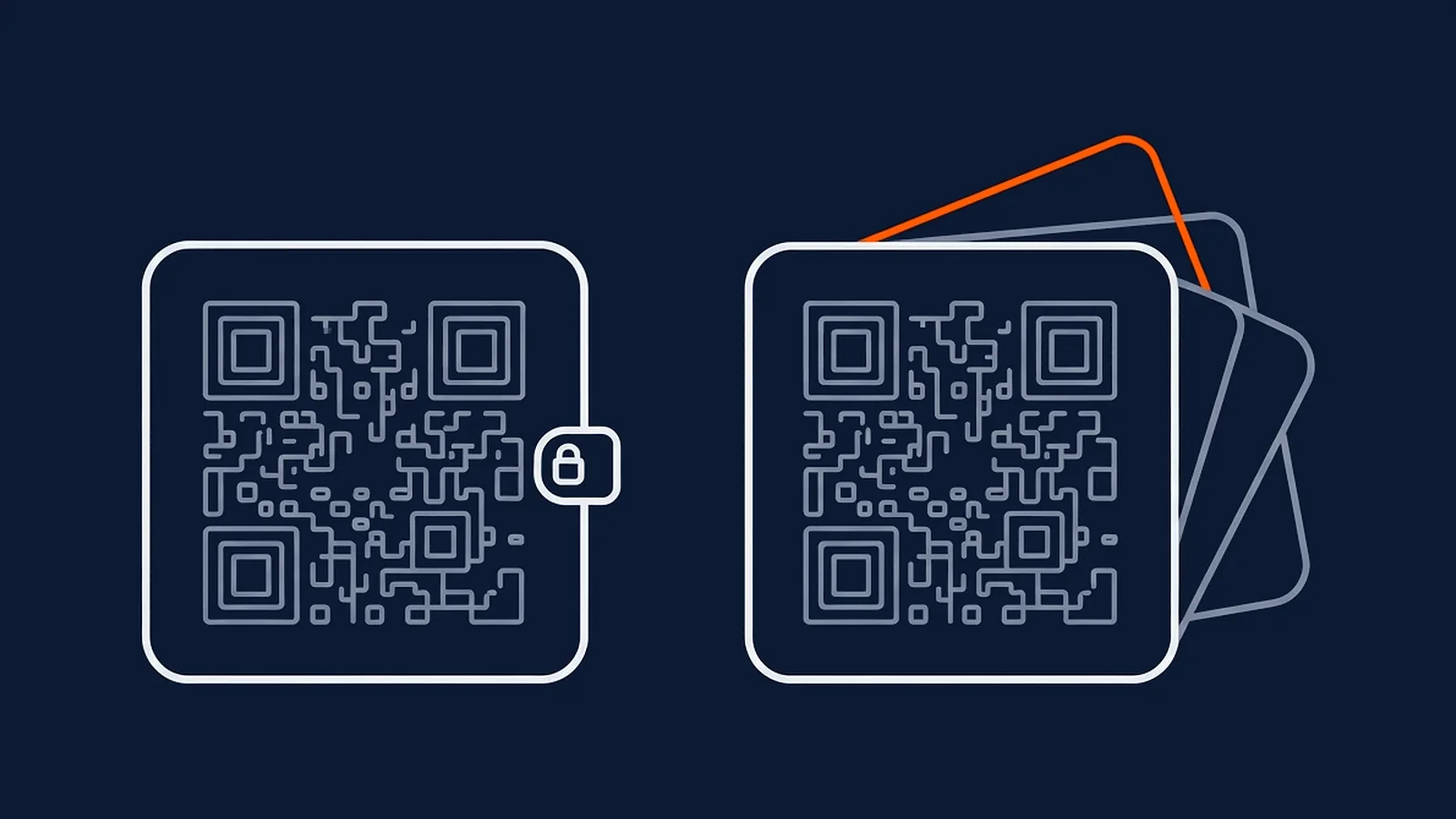
The printed artwork, whatever it's printed on, packaging, a poster, a vehicle wrap, a product manual, never needs reissuing because of a destination change. This is the entire commercial case for dynamic over static in one sentence: a static code's destination is physically inside the pattern, so a wrong or outdated destination means the printed material itself is wrong, and fixing it means printing it again. A dynamic code's printed pattern only ever needs to encode a short link that was correct on day one; everything downstream of that link can move freely without touching a single physical copy already in circulation.
The short link itself is also fixed for the life of the code, which matters as much as the destination being flexible. If the short link changed every time you edited the destination, you'd be back to needing a new printed pattern for every edit, which defeats the purpose entirely. The short link is the one thing that has to stay permanent so that everything routed through it can keep changing underneath it.
What actually changes, and what doesn't survive an edit
| Element | Changes on edit? | Notes |
|---|---|---|
| Printed pattern (the modules) | No | Generated once at creation; never regenerated |
Short link (tilg.in/{code}) |
No | Stays fixed for the life of the code |
| Destination URL | Yes | This is the only thing an edit actually changes |
| Scan history already recorded | No | Historical scans keep whatever destination was live at the time |
| Any UTM parameters on the destination | Yes, if you change them | Worth reviewing at the same time as the destination, since a stale parameter set silently miscounts new traffic |
Historical scan data deserves a specific note, since it's easy to assume incorrectly that editing a destination retroactively changes how past scans are understood. It doesn't. A scan recorded before an edit reflects the destination that was live at that exact moment, and changing the destination afterward doesn't reach back and reinterpret an earlier scan's numbers. This is a feature, not a limitation: it means a campaign's history stays an accurate record of what actually happened, even as the code itself moves on to a new destination.
Why an audit trail matters more on the bad day than the routine one
Most edits are unremarkable: a promotion ends, a landing page gets replaced, a URL structure changes on the marketing site, and someone updates the destination to match. An audit trail barely gets consulted on days like that, because nobody's asking questions. It earns its keep on the other kind of day, when a code is behaving in a way nobody expected and the first question anyone asks is some version of "who changed this, and when." Without a recorded log, that question has no real answer beyond piecing together memory and Slack messages, which is a poor way to investigate anything, let alone something a customer or a regulator might also be asking about.
A useful audit entry records, at minimum, who made the change, the exact timestamp, and both the old and new destination values. This turns a vague suspicion, "I think someone changed this last week," into a fact that can be checked in seconds. It also creates accountability before anything goes wrong, which changes behaviour on its own: an edit made knowing it's logged is made more carefully than one made knowing it disappears the moment it's saved.
The safety point most platforms skip: re-scanning on every edit
Screening a destination once, at the moment a code is first created, catches an obviously bad URL before it ever gets printed. It does nothing for what happens afterward. A destination that was entirely legitimate in March can be compromised by August, the underlying domain can expire and get re-registered by someone else, or a page that was clean can later be hijacked without the code's owner noticing anything has changed on their end at all. A platform that only checks a destination once, at creation, has no mechanism for catching any of that, because from its perspective the check already happened and nothing about the code has changed since.
Re-checking the destination at the moment of every single edit, not only at creation, closes that gap in the one place it actually needs closing: the exact moment a destination is about to change to something new. This matters specifically because an edit is, by definition, the one action that introduces a destination the platform hasn't already vetted. Skipping the check on edits while only performing it at creation protects against the threat that's easiest to imagine and does nothing about the one that actually plays out over a code's real, months-long lifespan in the field. Who genuinely controls a code's destination, and what obligations that control carries, is worth understanding fully before relying on any platform's edit behaviour, since the audit trail and the re-scanning both exist to answer the same underlying question: can you trust what this code is doing right now, not just what it was doing when it was printed.
The trade-off this only makes sense for
None of this is an argument that every code should be dynamic. The decision genuinely depends on whether the destination will ever need to change, and a code whose destination truly never will, a permanent product identifier, a fixed set of WiFi credentials, gets nothing from any of the mechanics described above and pays an ongoing cost for a flexibility it never uses. The value of editability, the audit trail, and edit-time re-screening all compound specifically for a code that's likely to need a destination change at some point in its printed life, which describes most marketing and packaging use cases far more often than it describes a permanent installation.
What this means for your next campaign
Treat the printed artwork and the destination as genuinely separate decisions from the moment a campaign is planned: the artwork, once approved, should never need to change again regardless of how the campaign's destination evolves. Ask any platform you're evaluating two direct questions before committing a print run to it: does it keep a real audit log of every destination edit, and does it re-check the destination for safety on every single edit, not only at creation. If a code is later reported as suspicious by a customer, the answer to both of those questions determines how quickly, and how confidently, you can actually respond.
Straight answers
Does editing a dynamic QR code's destination change how the printed code looks?
No. The printed pattern, the actual grid of black and white modules, is generated once and never changes again, because it encodes a fixed short link, not your real destination. Editing a dynamic code changes where that short link points to, on a server, not what's on the page or the packaging. Nobody needs to reprint anything for the change to take effect.
How quickly does an edited QR code destination take effect?
Effectively immediately for any scan that happens after the change is saved, since the redirect lookup happens at scan time, not at print time. There's no propagation delay comparable to, say, DNS changes; the next person to scan the code gets sent to the new destination, and the person who scanned it five minutes earlier already reached the old one.
What should an edit audit trail actually record?
At minimum: who made the change, exactly when, what the destination was before, and what it became. This matters less for routine, planned edits and much more the day something goes wrong, a code redirects somewhere nobody approved, or a printed campaign needs to be traced back to find out when and why its behaviour changed. Without a log, that question has no answer beyond guesswork.
Can a QR code's destination be edited to point somewhere malicious after it's printed?
In principle, yes, which is exactly why re-checking the destination at the moment of every edit matters, not only when the code was first created. A destination that was clean when a code launched can be compromised months later, and a platform that only screens at creation time has no way of catching that. Screening again on every single edit is what closes this specific gap.